
Environmental impact
Steel that never has to be made twice
Every tonne of metal we put back into production is a tonne that does not have to be mined, smelted and formed again. This page shows what that adds up to, how we work it out, and lets you run your own tonnes through the same method.
A year at Recycled
1,560 to 3,000 tonnes
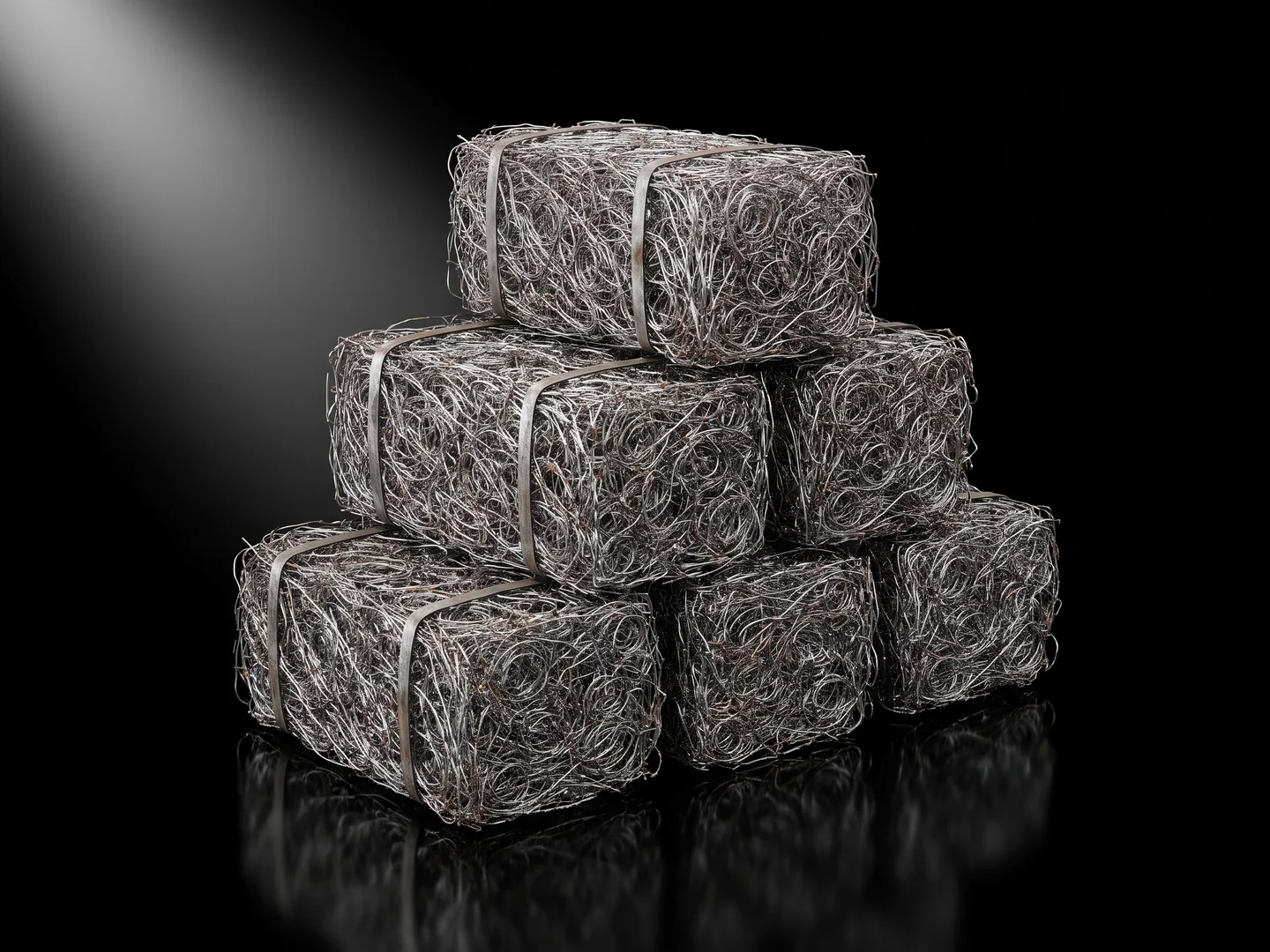
At the line's current output of 130–250 tonnes a month, that is the spring steel Recycled can supply in a year, every tonne of it recovered from mattresses that would otherwise have gone to landfill whole.
Picture it
Sixty to a hundred and twenty containers
A 40-foot container takes about 25 tonnes of baled spring steel. A year of our spring steel fills between 62 and 120 of them. Each block below is one container.
Container count is arithmetic from the public monthly volume and a nominal 25 t of bales per box; actual loads vary with bale density.
Calculator
Your tonnes, same method
Enter the metal you send us or buy from us. The calculator uses the same published recycling credits as every Recycled statement, nothing else.
100 t of metal recovered instead of made new.
Method
How it is worked out
Weigh it
Every load is weighed in and, once processed, the recovered metal is weighed out. Statements use those weights. Where an output weight was not taken, the usual recovery rate for that metal is used and the load is marked as an estimate.
Apply the credit
Recovered tonnes × the published recycling credit for that metal: the carbon avoided by not making the same metal new from ore, net of collection and reprocessing. Metal in landfill does not break down, so no landfill-methane saving is claimed. The figure is conservative.
Put it in perspective
Trees' worth = CO₂-e ÷ 0.060 t, the carbon one tree seedling absorbs over ten years. Cars off the road = CO₂-e ÷ 4.6 t a year. Both from the US EPA equivalencies calculator.
| Steel (incl. spring steel, stainless*) | 1.5 t CO₂ avoided per tonne. World Steel Association, "Scrap use in the steel industry" fact sheet |
|---|---|
| Copper (incl. copper from cable) | 5.2 t CO₂-e per tonne. US EPA WARM, Metals chapter, Exhibit 7 (copper wire, −4.72 per short ton) |
| Aluminium | 7.9 t CO₂-e per tonne. US EPA WARM, Metals chapter, Exhibit 7 (aluminium ingot, −7.19 per short ton) |
| Mixed metals (incl. brass*) | 4.8 t CO₂-e per tonne. US EPA WARM, Metals chapter, Exhibit 7 (mixed metals, −4.38 per short ton) |
| Trees, cars | 0.060 t CO₂ per tree seedling over ten years; 4.6 t CO₂ per passenger car per year. US EPA Greenhouse Gas Equivalencies Calculator |
* Stainless steel and brass use the steel and mixed-metal figures as stand-ins until a metal-specific factor is adopted. All factors are listed, with links, on the Factors page in Recycled Connect.
Want it on paper?
Partners get a recovery statement for any period. Buyers get a load statement with every dispatch.